

Mike McDaniel was at the top of the Tampa Bay Buccaneers’ wish list this offseason as they searched for a new offensive coordinator.
The Buccaneers needed to nail this hire after Josh Grizzard was fired after just one season. Tampa Bay was set to have its fifth offensive coordinator in five years, and with Todd Bowles on the hot seat, he needed his offense to be in good hands.
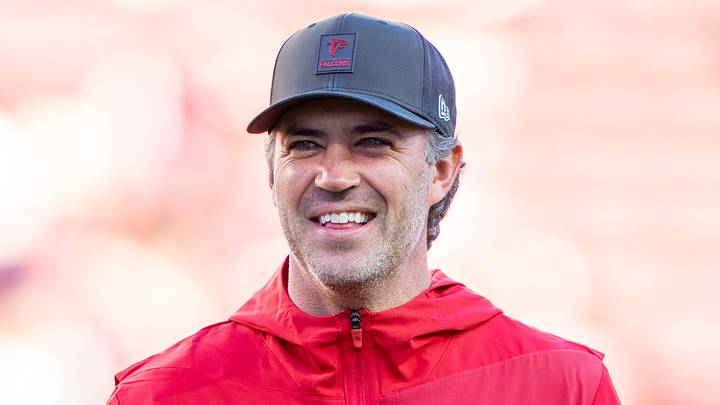
McDaniel ultimately chose to head to the West Coast to join forces with head coach Jim Harbaugh and quarterback Justin Herbert. Tampa Bay pivoted to Zac Robinson, who they had a front-row seat to in the NFC South as he spent two seasons calling the Falcons offense.
At the time, it sure felt like a hollow consolation prize. Tampa Bay was being forced to settle for its second choice after missing out on one of the NFL’s most respected minds. But after what we saw in Week 1, McDaniel’s decision to turn down Tampa Bay may have been a blessing in disguise.
Tampa Bay Buccaneers may be better off with Zac Robinson
The Buccaneers’ season opener was no offensive masterclass, but that had more to do with the players' self-inflicted wounds than the play-caller.
Robinson’s offense was effective, as Tampa Bay moved the ball up and down the field at will. The system allowed Mayfield to play point guard, making high-percentage throws and allowing his playmakers to do the rest. As a result, Mayfield completed 82% of his attempts and the passing game was highly efficient.
Robinson heavily utilized play-action passes as well as pre-snap motion, two areas where the Buccaneers ranked toward the top of the league in Week 1. The system also did a better job utilizing the team’s playmakers than last year’s offense under Grizzard.
Week 1 pre-snap shift/motion and play-action percentage on dropbacks.
— Ian Hartitz (@Ihartitz) September 15, 2026
We *usually* see the league's smarter (and better) offenses in the top right corner of charts like these. pic.twitter.com/5N1GEsypIO
Like the passing game, the rushing game was also efficient. The Bucs rushed for 4.5 yards per carry, and Irving produced 5.6 yards per carry and a touchdown.
The Buccaneers’ downfall was turnovers. Mayfield fumbled three times, and Bucky Irving added a fumble of his own. But despite four turnovers, Tampa Bay lost by just one possession. If they simply took care of the ball, the Bucs would have had a real opportunity to eclipse 30 points in Robinson’s first game calling the offense.
Meanwhile, things weren’t nearly as smooth in Los Angeles.
Mike McDaniel’s Los Angeles Chargers offense struggled in Week 1
The Chargers were among the NFL's heaviest favorites in Week 1 at home against the Arizona Cardinals.
Los Angeles was shockingly upset 26-14, in large part because of a dormant offense that struggled to produce despite having one of the NFL’s premier quarterbacks in Justin Herbert. Arizona finished 29th in the NFL last season, allowing 28.7 points per game, but held the Chargers to just two touchdowns on opening day.
Herbert went 17-of-27 (63%) with a touchdown and an interception. Los Angeles was inefficient on the ground, as Omarion Hampton rushed for 3.6 yards per carry and Keaton Mitchell rushed for just 2.3 yards per carry.
They were completely stifled against an Arizona squad widely expected to be one of the NFL’s worst teams.
Week 1 can be a liar, and only one game has been played. There’s plenty of time for the narrative to change. But through just one week, Tampa Bay’s offense under Robinson looked worlds better than the Chargers’ offense under McDaniel.
 Add us as a preferred source on Google